Cat Always: A Designer’s Real-World Embroidery Review
First Impressions: Playful, Clean, and Surprisingly Versatile
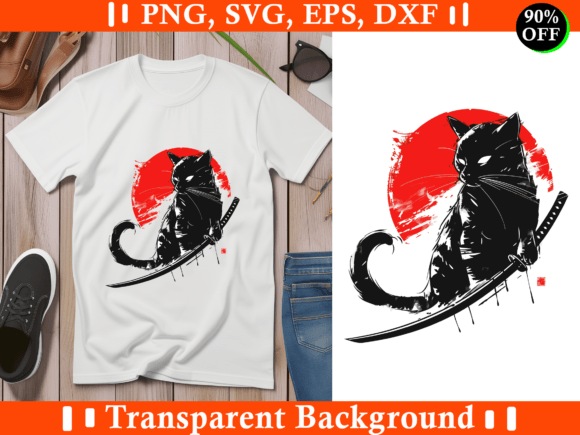
When I opened Cat Always for the first time, I wasn’t expecting much—just another cute cat graphic. But it landed differently. The silhouette is confident without being cartoonish; the curve of the tail, the tilt of the head, and the subtle negative space around the ears all suggest intentionality. It reads as a graphics piece built for translation—not just screen printing or digital printing, but real-world stitch execution. As a designer who regularly converts vector files into machine embroidery designs, I immediately asked: *Will this hold up in satin stitch? Will corners crisp cleanly on a curved sweatshirt hem? Will it read at 3 inches wide on a baby onesie?*
A Real Project Test: Embroidering Cat Always on a Linen-Cotton Tote Bag
Last week, I used Cat Always for a small-batch tote bag order—a boutique client wanted something warm, gender-neutral, and quietly clever for their local gift shop. I chose natural linen-cotton blend fabric, medium-weight tear-away stabilizer, and matte cotton thread in charcoal and cream. The result? Crisp edges, no puckering, and zero lost detail—even where the tail curls under itself. That told me something important: Cat Always has thoughtful spacing and balanced weight distribution. It’s not overloaded with micro-details that vanish in fill stitch, nor is it so minimal it feels hollow on textured fabric.
Where Cat Always Shines (and Where It Needs Care)
Cat Always works beautifully for:
- Custom apparel: Especially on crewnecks, relaxed tees, and unstructured jackets—its shape flows with drape rather than fighting it.
- Embroidered patch production: The clean outer contour means clean cut edges and easy backing application.
- Baby embroidery and nursery decor: Soft enough for onesies and burp cloths, bold enough to read on a quilt square or pillow cover.
- Holiday embroidery and personalized gifts: Paired with simple seasonal accents (a tiny bow, a single holly leaf), it gains warmth without losing identity.
- Small shop product branding: It scales well across tags, packaging stickers, and even embroidered tea towels—feeling handmade but never amateur.
But—and this matters—I’d hesitate to use Cat Always without testing first on:
- Stretchy fabric like jersey knits (unless paired with cut-away + topping stabilizer),
- Very thin fabrics like voile or lightweight rayon (stitch density could cause show-through),
- Curved surfaces like structured caps (the tail’s gentle arc may distort unless digitized with underlay and pull compensation),
- Dark fabric without checking contrast in a black-and-white printable mockup first—some versions of the design rely on outline clarity over tonal depth.
What It Says About Your Craft Business
When your customers see Cat Always stitched on a tote, apron, or baby blanket, they’re not just seeing a cat—they’re sensing intention. That matters for Etsy sellers and handmade shops where buyers pay a premium for perceived care and consistency. This isn’t a throwaway clipart-style T-Shirt Designs file. Its vector foundation (AI format) means you can scale it confidently for large sweatshirt embroidery or shrink it down for a delicate cap front—but only if you respect its proportions. I’ve seen designers squash it too far and lose the quiet charm of the ear shape. Don’t do that.
Design Assets That Earn Trust—Not Just Traffic
As an embroidery product reviewer, I’ve tested hundreds of digital embroidery files. Most fail silently: poor stitch order, jagged curves, inconsistent density. Cat Always doesn’t scream “professional,” but it behaves like one. It layers cleanly with other elements (think: monogram initials beside it on a pillow cover), holds contrast well in both light and dark thread colors, and avoids dense fill areas that trap moisture or stiffen fabric. That directly affects product value, customer trust, and handmade presentation. A poorly executed cat looks like a last-minute add-on. Cat Always looks like part of the story.
Practical Notes Every Embroidery Designer Should Check
Before stitching Cat Always into your next finished product, take five minutes to:
- Run a test on scrap fabric matching your project’s texture and weight,
- Compare thread color options side-by-side—especially if using variegated or matte threads,
- Review stitch density visually (not just by count); look for any tight clusters that might snag,
- Confirm hoop size compatibility—some AI vectors assume standard 4x4 or larger hoops,
- Check whether your digitizing software interprets the paths correctly (especially closed shapes vs. open strokes),
- Test a black-and-white version to verify readability on dark backgrounds,
- Verify licensing terms before selling finished items or bundling it into your own digital embroidery file collections—this is critical for Etsy sellers and craft business owners.
Final Thought: Not Just a Design—A Reliable Detail
Cat Always won’t win awards for complexity. But in the daily rhythm of embroidery work—juggling client deadlines, fabric quirks, thread substitutions, and small-batch consistency—it earns respect. It’s the kind of design that makes your custom apparel feel cohesive, your personalized gift feel considered, and your craft business feel grounded. Use it where simplicity needs sincerity. Stitch it where charm should speak softly—and clearly.