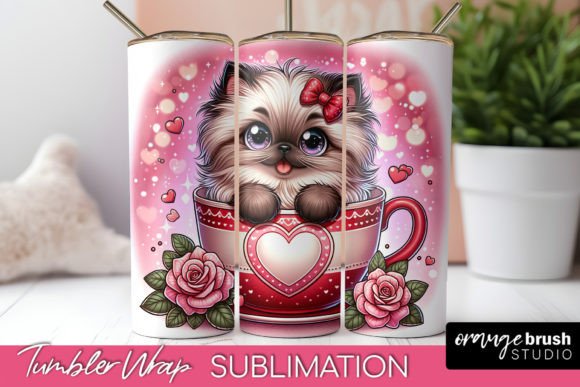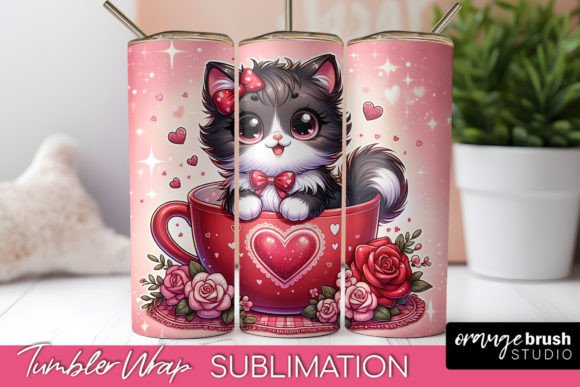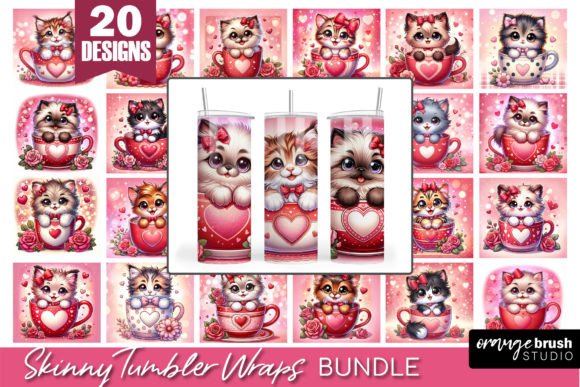
Valentine’s Day Cat Skinny Tumbler Wrap
A Designer’s First Glance: Charm with Clear Intent
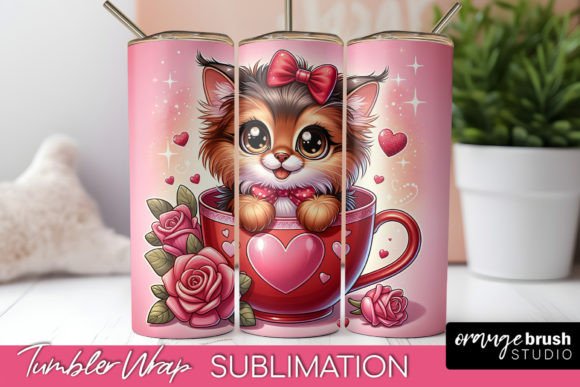
When I opened Valentine’s Day Cat Skinny Tumbler Wrap, what struck me wasn’t just the sweetness—it was the intentionality. A playful cat curled around a heart, soft paws tucked in, whiskers gently arched—no frantic energy, no cluttered borders. It’s compact, centered, and built for vertical rhythm. That tells me this isn’t just a sublimation graphic tossed into a tumbler category; it’s a mood-first design that happens to fit a skinny tumbler shape—and that same focused composition translates surprisingly well to embroidery applications.
Where This Design Feels Like Home
I recently used Valentine’s Day Cat Skinny Tumbler Wrap as the starting point for a custom embroidered baby onesie set—tiny hearts stitched beside a simplified cat silhouette on the chest, paired with matching tea towels for new parents. Why it worked: the original layout already implies balance and gentle scale. Its clean lines translate cleanly into satin stitch outlines and soft fill-stitch bodies. No over-engineered details mean fewer thread breaks on delicate baby fabric, and the moderate width keeps it legible even at 3.5 inches tall—ideal for sweatshirt cuffs, tote bag corners, or pillow covers where subtlety reads as sophistication.
This isn’t a design screaming for center-stage placement on a full-zip hoodie. It thrives where quiet charm matters: embroidered patches for boutique aprons, minimalist caps for local coffee shops, or personalized kitchen towels sold at craft fairs. As a digital embroidery file, it holds up especially well when resized between 2.75” and 4.25”—a sweet spot for most commercial embroidery projects without pushing detail limits.
What Works—and Where to Pause
Valentine’s Day Cat Skinny Tumbler Wrap shines on stable, medium-weight fabrics: cotton twill for patches, brushed poly-cotton for tote bags, and midweight fleece for baby blankets. Its streamlined shape avoids dense fill areas, so stitch density stays manageable—even on home machines. That means less stabilizer bulk, cleaner wash durability, and fewer skipped stitches on textured surfaces like canvas or linen-look tea towels.
But here’s where attention matters: avoid stretching it onto curved surfaces like baseball caps unless you’re using a cap frame and testing tension first. The narrow vertical format doesn’t adapt well to crown curvature without subtle distortion. Also, if you’re planning an appliqué design version, watch the inner negative space—the cat’s ear and heart gap are tight. On thin or stretchy fabric (think lightweight jersey onesies), that area may need extra tear-away stabilizer or a light cutaway backing to prevent puckering.
And while the design reads clearly on light backgrounds, don’t assume automatic contrast on dark fabric. Test your thread colors in both black-and-white and color mockups before digitizing. A soft rose satin stitch might vanish on navy unless backed with white underlay—or swapped for a slightly brighter blush tone.
Real Impact on Your Craft Business
As an Etsy seller and small shop product developer, I pay close attention to how a design affects perceived value—and Valentine’s Day Cat Skinny Tumbler Wrap delivers quiet professionalism. Customers recognize care in restraint: no busy borders, no forced cuteness. That builds trust. When someone orders a personalized gift—a monogrammed sweatshirt with this cat motif stitched just above the hem—they’re buying warmth, not noise. That emotional resonance lifts average handmade products into memorable keepsakes.
For craft fair vendors, it’s versatile inventory: one embroidery file becomes a patch, a tote bag design, a baby bib, and a holiday card insert—all with consistent branding. And because it’s rooted in a seasonal but not overly literal theme (hearts + cats, not Cupid + arrows), it extends beyond February into spring gifting and nursery decor—making it a smarter long-term design asset than flashier, trend-bound graphics.
Practical Notes Every Embroidery Designer Should Check
- Test on scrap fabric first—especially if pairing with textured or dark materials.
- Review stitch density before scaling up; denser fills can overwhelm lightweight fabrics.
- Confirm hoop size compatibility; its vertical orientation favors 4x4 or larger hoops, but verify before stitching on tight spaces like hat fronts.
- Inspect small details at actual stitch-out size—whiskers and heart contours should remain distinct, not merge into fuzzy blobs.
- Use proper stabilizer based on fabric type—not just “medium” by default. Lightweight cutaway works best for knits; tear-away is fine for stable cottons.
- Check licensing terms before selling finished items or bundling as part of a digital embroidery collection—this is critical for Etsy sellers and digital product creators.
- Compare light and dark fabric backgrounds in printable mockups to ensure visual clarity across your product range.
Final Thought: A Thoughtful Tool, Not Just a Trend
Valentine’s Day Cat Skinny Tumbler Wrap isn’t flashy—but that’s its strength. In a market flooded with over-digitized, high-density machine embroidery designs, this one breathes. It leaves room for craftsmanship to show through: clean satin stitch edges, intentional thread color choices, thoughtful placement on a handmade product. Whether you’re embroidering a boutique apron, prepping a holiday gift bundle, or building a cohesive line of small shop merchandise, it’s the kind of design that supports your voice—not drowns it out. Use it with intention, test it with care, and let its quiet charm do the talking.