Valentines Baby PNG Sublimation
First Impression: Soft, Sweet, and Ready for Stitching
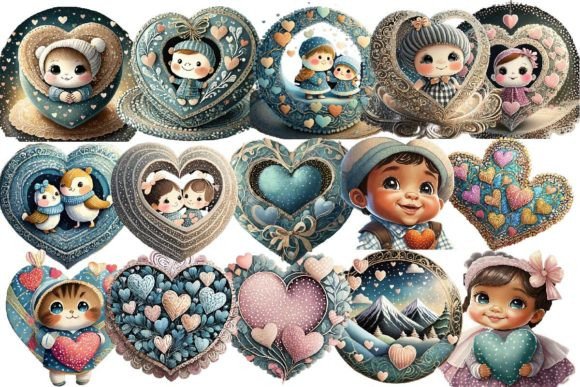
Opening Valentines Baby PNG Sublimation feels like flipping through a quiet sketchbook—watercolor washes, gentle outlines, and that unmistakable tenderness of early parenthood. The 16 designs in this set aren’t loud or overly stylized; they’re intimate, with subtle heart motifs, tiny booties, pacifiers, and sleeping baby silhouettes—all rendered in soft, organic strokes. At 2048×2048 pixels and 300dpi, the resolution holds up beautifully when zoomed into fine edges, which matters more than you’d think when converting to machine embroidery design later. As a designer who’s stitched hundreds of baby-themed pieces—from hospital welcome bags to boutique nursery pillows—I immediately sensed this set leans into warmth over whimsy. It’s not cartoonish. It’s not cutesy overload. It’s grounded, calm, and quietly celebratory—the kind of visual tone that reads as premium on a linen tea towel or an organic cotton onesie.
A Real Project Test: Embroidering a Keepsake Tote for New Parents
Last week, I prepped a custom embroidered tote bag for a client expecting her first child—a gift for her baby shower. She wanted something sweet but not saccharine, gender-neutral, and elegant enough to carry beyond the newborn phase. I opened Valentines Baby PNG Sublimation, selected the “Sleeping Baby & Heart” motif, and began the translation from digital clipart to stitch file. Here’s what stood out: the watercolor texture translated surprisingly well into satin stitch gradients when vectorized thoughtfully. The soft edges didn’t pixelate or blur under dense fill stitch—they gave me room to interpret light and shadow with thread color layering (think blush pink over ivory, then pale gray for depth). On a medium-weight canvas tote, the final result felt handmade—not printed, not sublimated, but *stitched*, with visible texture and care.
Where It Shines—and Where to Pause
Valentines Baby PNG Sublimation excels in projects where subtlety builds value: personalized baby blankets, minimalist nursery wall hangings, embroidered kitchen towels for new moms, and boutique aprons for baby-led weaning classes. It works especially well for sweatshirt embroidery and tote bag design because the scale and flow suit relaxed, breathable fabrics without demanding ultra-fine detail.
That said—proceed with intention on:
- Stretchy or thin fabric: The delicate linework needs solid stabilizer backing; skip it on lightweight knits unless you’re using cutaway + topping.
- Curved surfaces like caps or hats: Some motifs have wider horizontal spans—test hoop placement carefully to avoid distortion near the bill seam.
- Dark fabric backgrounds: While the transparent PNG gives flexibility, the watercolor softness means low-contrast thread choices (e.g., heather gray on charcoal) can mute definition. Always preview in black-and-white mockups first.
- Products requiring frequent washing: Baby clothes and kitchen towels need tight stitch density and secure underlay—don’t assume the original graphic’s lightness translates directly to low-stitch-count embroidery files.
Design Judgment for Craft Business Owners
If you’re an Etsy seller or small shop owner building a Valentine’s or baby collection, Valentines Baby PNG Sublimation is a strong asset—but only if you treat it as a starting point, not a finish line. Its strength lies in mood and cohesion, not plug-and-play embroidery readiness. For example, I used one of the heart-and-bootie combos as an applique design base, adding a single satin-stitched border to anchor it on a denim patch—suddenly it read as heirloom-quality, not clipart-derived. That shift from graphic to finished product hinges on your eye for balance, contrast, and textile behavior.
Customers respond to authenticity. A hand-stitched look—even when machine-made—builds trust. This set supports that when edited with purpose: simplifying stray watercolor flecks, reinforcing key outlines, and adjusting proportions for hoop size. It doesn’t scream “commercial embroidery,” but it whispers “thoughtful handmade product.” And in today’s market? That whisper often outsells the shout.
Practical Notes Every Embroidery Designer Should Check
Before committing to a full run—whether for your own craft business or a client project—do these six things:
- Test the design on scrap fabric matching your final product’s weight and stretch.
- Check thread color contrast across at least three fabric tones: light, medium, and dark.
- Review stitch density—especially in watercolor-blended zones—to avoid puckering or thread breakage.
- Confirm hoop size compatibility; some motifs span wider than standard 4×4 hoops.
- Inspect small details (like eyelashes or heart dimples) at actual stitch scale—what looks charming at 200% zoom may vanish in thread.
- Verify licensing terms before selling finished items or bundling the PNGs into digital embroidery files—this is a Graphics asset, not an embroidery file by default.
Final Thought: A Quiet Design That Earns Its Place
Valentines Baby PNG Sublimation won’t dominate a trade show booth or trend on TikTok overnight. But it earns its place in your Print Templates library the way a favorite neutral yarn earns space in your stash—reliable, versatile, and deeply human. It fits naturally into holiday embroidery, personalized gifts, and small shop merchandise where emotional resonance matters more than flash. Used with attention to fabric, stitch, and story, it becomes more than clipart. It becomes part of someone’s first memory—stitched onto a blanket, pressed into a pillow cover, or carried home from a baby shower in a tote that still holds meaning years later. That’s the quiet power of a well-chosen design. And this one? It delivers.