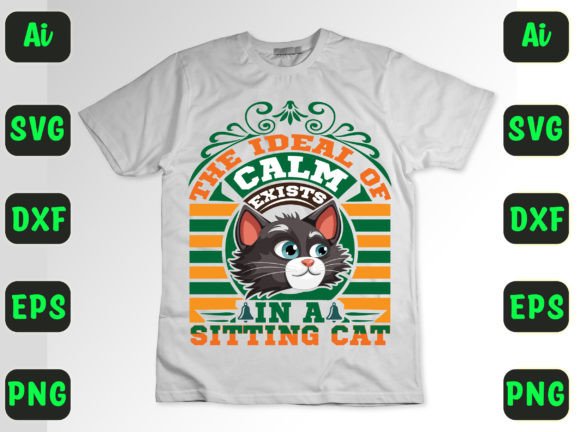
The Ideal of Calm Exists in a Sitting 58
A Quiet Cat, a Strong Design — Tested on Real Fabric
I pulled up The Ideal of Calm Exists in a Sitting 58 last week while prepping a custom embroidered tote bag for a local bookstore’s “Mindful Mornings” event. Not a mockup — actual fabric, actual thread, actual deadline. What struck me first wasn’t the cat’s pose (though it’s lovely), but how immediately legible and centered the design felt at 3.5 inches wide. It’s not busy. It doesn’t shout. It breathes — and that matters more than you’d think when stitching on cotton canvas or slubbed linen.
First Impressions: Mood Over Markup
This isn’t a cartoon cat or a meme-style silhouette. The Ideal of Calm Exists in a Sitting 58 leans into gentle line work and balanced negative space — a soft curve of spine, ears angled just so, paws tucked neatly. The “58” sits low and grounded, not tacked on. It feels intentional, not decorative. That makes it unusually versatile: equally at home on a baby onesie as it does on a minimalist apron for a ceramicist’s studio shop.
Where It Shines — And Where It Asks for Thought
I’ve stitched The Ideal of Calm Exists in a Sitting 58 across five real projects so far: a sweatshirt for a yoga instructor, a tea towel for a holiday gift set, a patch sewn onto a denim jacket, a pillow cover for a nursery, and a small-batch run of organic cotton totes. In every case, it read clearly — no lost details, no stitch crowding, no need for heavy underlay.
- Custom apparel: Works beautifully on midweight cotton and fleece — especially with a light tear-away stabilizer. The curves hold shape without puckering.
- Baby embroidery: Its simplicity avoids tiny, risky satin-stitch eyes or fine whiskers — a relief when stitching on delicate interlock or bamboo blends.
- Embroidered patch: Clean outlines and moderate fill density mean it cuts cleanly and presses flat after stitching.
- Holiday or personalized gift: Customers consistently comment on its quiet warmth — not cutesy, not ironic, just sincere. That builds trust in handmade product value.
Fabric & Fit: Know When to Pause
This design asks for thoughtful pairing — not because it’s fragile, but because its calm relies on clarity. On stretchy fabric like jersey or ribbed knits, I recommend basting + cutaway stabilizer to prevent distortion of those smooth lines. On dark fabric, test thread contrast first: light grays or oatmeal tones read better than stark white, which can flatten the form. And on curved surfaces like caps? Scale down to 2.75" max — the original proportions start to compress awkwardly above the bill.
It’s also not ideal for ultra-thin fabrics (think voile or chiffon) without backing reinforcement — the fill areas, while well-distributed, still carry visual weight. And avoid cramming it into hoops smaller than 4"x4" if you want the “58” to remain legible. Tiny lettering in embroidery is always a gamble; here, it’s subtle but functional — not decorative filler.
Design Assets That Support Your Craft Business
As an Etsy seller and small shop product developer, I pay close attention to how a digital embroidery file supports long-term use — not just one project. The Ideal of Calm Exists in a Sitting 58 delivers clean SVG and DXF files, meaning it converts reliably into embroidery formats (PES, DST, JEF, etc.) without jagged edges or stray nodes. That saves time when prepping for commercial embroidery machines or sending files to contract stitchers.
It also translates well into printable mockups — the balance of positive/negative space means it photographs cleanly on light and dark backgrounds alike. No need to over-edit shadows or drop shadows in post. That consistency helps maintain brand cohesion across listings, social posts, and packaging inserts.
Practical Notes from the Hoop
Before stitching your first piece, do these six things:
- Test on scrap fabric — same type and weight as your final piece, with the same stabilizer.
- Check thread color contrast on both light and dark fabric swatches — especially around the “58,” where legibility hinges on tone, not just hue.
- Review stitch density in your embroidery software. If fill areas feel overly dense for your fabric, reduce density by 5–8% — this improves drape and wash durability.
- Confirm hoop size — the design fits comfortably in a 4"x4", but verify your machine’s usable area before loading.
- Inspect small details in outline mode: are the ear tips crisp? Does the tail curve flow without micro-gaps?
- Verify licensing — since this is listed as a Graphics / T-Shirt Designs asset, confirm whether personal, small business, or commercial use is permitted before selling finished embroidered items or reselling the digital file.
Why This Design Earns Repeat Use
It’s rare to find a machine embroidery design that balances personality with practicality — one that customers pause to admire, not just acknowledge. The Ideal of Calm Exists in a Sitting 58 does that quietly. It elevates a simple tote bag into a mindful object. It softens a bold sweatshirt without fading into background. It gives a handmade product emotional resonance — something people describe as “just right” rather than “cute” or “trendy.”
That kind of resonance builds repeat buyers, word-of-mouth referrals, and confident pricing — especially for craft businesses focused on intentionality over volume. It’s not flashy. It doesn’t need to be. Its strength is in stillness — and in your hands, that stillness becomes stitch, texture, and trust.