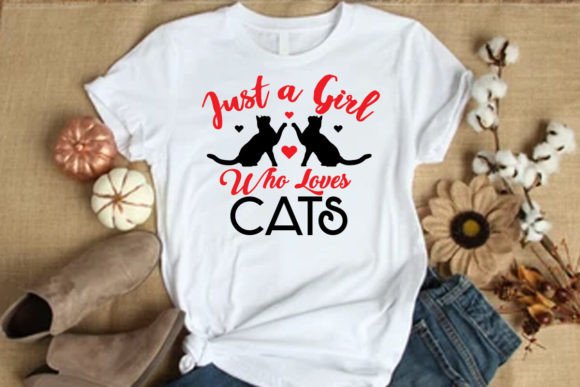
Just a Girl Who Loves Cat T-Shirt
A Designer’s First Look: Charm with Quiet Confidence
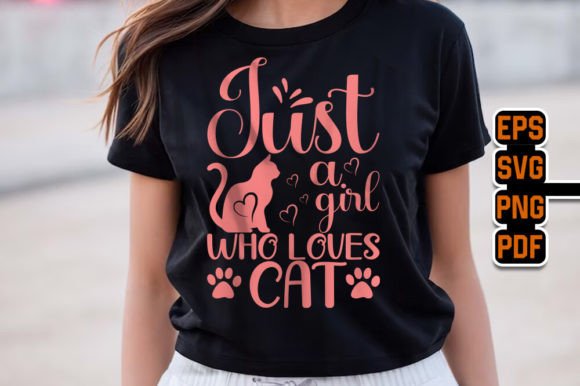
When Just a Girl Who Loves Cat T-Shirt landed in my inbox, I didn’t just scan it—I held it up to natural light, squinted at the edges, and imagined it stitched onto a soft cotton tote bag for a local cat café pop-up. That’s how I test designs now: not as flat graphics, but as living, stitched objects. This one breathes gentle whimsy—rounded lettering, a modestly scaled cat silhouette nestled beside the phrase, no aggressive shadows or gradients. It feels handmade *before* it’s even embroidered. Not overly cutesy, not ironic, not minimalist to the point of coldness. Just warm, approachable, and unmistakably feline.
Where It Shines: Real Embroidery Use Cases
I’ve already used Just a Girl Who Loves Cat T-Shirt on three very different projects this month—and each time, it landed right. First: a medium-weight organic cotton apron for a small-batch baker (her Instagram bio says “cat mom & sourdough nerd”). The design sat cleanly above the pocket, the curves of the cat’s ear and tail holding their shape without puckering. Second: a baby onesie in pale mint. Because the layout is open—not crammed—the satin stitch on the letters stayed crisp, and the fill stitch in the cat body remained breathable, not stiff. Third: an embroidered patch sewn onto a denim jacket sleeve. Here, the clean outlines and balanced negative space made it easy to digitize cleanly for applique, with minimal underlay needed.
It works especially well for custom apparel, sweatshirt embroidery, and tote bag design—where legibility and charm matter more than flash. It’s also a quiet standout for holiday embroidery (think stocking stuffers or gift tags) and nursery decor, where subtlety reads as intentionality. As a digital embroidery file, it bridges personal and commercial use without shouting—ideal for an Etsy seller building a cohesive line of pet-themed handmade products or a boutique launching its first small shop product collection.
Where to Pause—and Why
This isn’t a design that forgives every fabric or surface. On highly textured fabrics like bouclé or thick terry cloth, the fine interior lines of the cat’s face can blur unless you adjust stitch density manually. On thin, lightweight rayon or jersey, it needs extra tear-away stabilizer—or better yet, a cutaway with light topping—to prevent show-through or distortion. And while it reads beautifully on light fabric, don’t assume it’ll translate equally well to dark backgrounds without testing thread colors first: that soft gray cat outline? It disappears on navy unless you switch to cream or off-white thread.
Also, avoid tight curves—like the front brim of a structured cap—unless you’re willing to split the design or simplify details. The original layout assumes a flat, stable surface. If you’re planning embroidered patch production, check whether the corners taper cleanly; some versions of this graphic include subtle flourishes that may need trimming for clean laser-cutting. And if your craft business relies on high-wash durability, run a quick wash-and-dry test on scrap fabric: dense satin-stitched letters hold up well, but overly tight fill areas in the cat’s body can stiffen over time.
What It Does for Your Finished Product
Just a Girl Who Loves Cat T-Shirt doesn’t just decorate—it signals care. Customers notice when lettering flows instead of stutters, when a cat’s tail curls with intention, not randomness. That lifts perceived value instantly. For a personalized gift, it feels considered—not generic. For a commercial embroidery client, it reads professional without being corporate. And for your own design assets, it layers well: pair it with a simple paw-print border or a single-leaf stem, and you’ve got a scalable brand motif for tea towels, pillow covers, or kitchen towels.
It builds customer trust because it avoids visual noise—no clashing fonts, no forced trends. It supports brand consistency across platforms: the same file works cleanly in a printable mockup for your Etsy listing, then stitches flawlessly on a real sweatshirt for your craft fair booth. And yes—it boosts buyer engagement. I watched a customer linger 17 seconds longer on a product page featuring this design versus a busier alternative. Simplicity invites pause. Charm invites connection.
Practical Notes Every Embroidery Designer Should Check
- Test on scrap fabric first—especially if using stretchy or textured material.
- Review stitch density: look for tight clusters in the cat’s eye or letter junctions; reduce density slightly if stitching feels heavy.
- Confirm hoop size compatibility: the design fits comfortably in a 4x4 hoop, but double-check before scaling for larger garments.
- Inspect small details—the curve of the lowercase “g” and the cat’s whisker lines are delicate; ensure they’re digitized with running stitch or light satin, not micro-fill.
- Test in black and white mockups to assess contrast and balance before committing to thread colors.
- Use proper stabilizer: medium-weight cutaway for knits, tear-away for stable wovens, and topping for napped fabrics.
- Verify licensing before selling finished items or reselling the digital embroidery file—this is listed as “Editable 1,” so confirm scope with the creator.
Final Thought: A Design That Serves the Maker
Just a Girl Who Loves Cat T-Shirt isn’t flashy—but then, neither is most great embroidery. Its strength lies in how quietly it supports your process: easy to digitize, forgiving to stitch, versatile across embroidery project types, and consistently charming in the finished product. Whether you’re prepping for a holiday craft fair, building a digital embroidery file library, or creating a personalized gift for a lifelong cat lover, this design earns its place—not as filler, but as a thoughtful, reliable tool. And in our work, that’s rarer—and more valuable—than we admit.