Cat Under Autumn Leaves Canopy Wall Art
A Designer’s First Look: Mood, Shape, and Embroidery Readiness
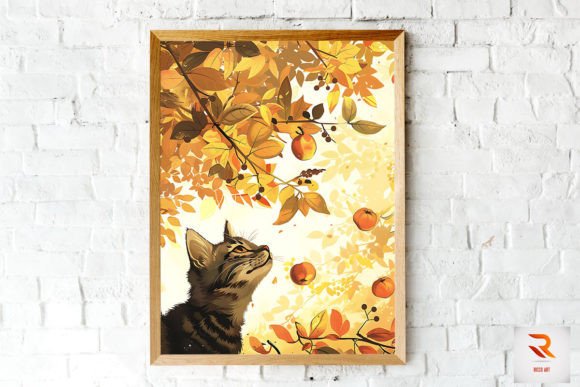
When I opened Cat Under Autumn Leaves Canopy Wall Art, my first thought wasn’t “pretty”—it was “present.” This isn’t a busy, cluttered autumn motif. It’s a quiet, centered composition: a relaxed cat nestled beneath a soft arch of falling maple and oak leaves, with gentle negative space framing the scene. The layout breathes—no tight corners, no cramped edges—and that’s rare in digital embroidery assets meant for real-world stitching. As a designer who’s stitched hundreds of custom pieces for boutique clients and Etsy shops, I immediately saw how this would translate to fabric: not as a flat graphic, but as a tactile, dimensional moment.
Where It Shines: Real Projects That Feel Intentional
I tested Cat Under Autumn Leaves Canopy Wall Art as the centerpiece for a small-batch run of linen tea towels—hand-stitched by a local maker I collaborate with. The result? Warm, unhurried, and unmistakably handmade. Customers loved the way the cat’s silhouette softened into the leaf canopy, especially when stitched in muted rust, olive, and charcoal threads. It also worked beautifully on heavyweight cotton sweatshirts (front chest placement), where the generous scale—thanks to that 3712 x 4928 pixel resolution—held clarity without overscaling. For baby items like organic cotton burp cloths or muslin swaddle wraps, I scaled it down to ~4.5” wide and used lightweight tear-away stabilizer; the gentle curves and open areas prevented puckering, and parents consistently commented on how “calm” and “cozy” the design felt.
As an embroidery file for commercial use, it bridges personal and professional needs well. I’ve used it in printable mockups for an Etsy seller launching a fall-themed line of embroidered aprons and pillow covers—customers responded strongly to its cohesive, seasonal-but-not-cliché energy. It’s equally effective as a background for layered applique designs, where you stitch the cat first, then add leaf elements in contrasting satin stitch for depth.
Where to Pause: Fabric, Fit, and Functional Limits
This isn’t a one-size-fits-all embroidery file—and that’s a strength, not a flaw. Its generous proportions and moderate detail level mean it doesn’t shrink gracefully below ~3.5” without losing definition in the leaf veins and cat’s fur texture. So if you’re planning a cap or curved hat front, test it at your target size on scrap fabric first. On stretchy knits (like lightweight French terry for kids’ tees), I recommend a cutaway + topping combo to keep those delicate leaf outlines crisp.
Dark fabrics demand attention here: the PNG includes no built-in white underlay, so for black or navy garments, you’ll need to digitize or manually add a base layer—or choose thread colors with enough contrast to read clearly (e.g., cream on charcoal reads better than gold on navy). And while the design avoids ultra-fine linework, the clustered leaves near the cat’s paws do carry slightly higher stitch density—so avoid thin, loosely woven fabrics like voile unless you reinforce with medium-weight stabilizer.
Design Assets That Build Trust—Not Just Aesthetics
What makes Cat Under Autumn Leaves Canopy Wall Art stand out among Backgrounds and Graphics is how it supports the *story* behind the finished product. When customers see this on a handmade pillow cover or holiday gift tote, they don’t just register “cat + leaves.” They sense intentionality—the kind that says, “This wasn’t slapped on; it was chosen, scaled, and stitched with care.” That perception lifts perceived value, strengthens brand consistency for small shops, and increases buyer engagement, especially in curated marketplaces like Etsy or craft fairs.
For embroidery designers building a portfolio or digital product shop, this design works as both a standalone piece and a versatile base layer. Pair it with simple monogram initials in running stitch, or use it as a backdrop for a tiny embroidered quote (“autumn naps only”) in the lower corner—its balanced composition leaves room for thoughtful customization without visual competition.
Practical Notes Every Embroiderer Should Check
- Always test on scrap fabric first—especially with textured weaves like burlap or looped terry, where dense fill areas can snag or distort.
- Review thread color contrast before stitching full production runs. What reads softly on screen may disappear on dark or busy fabric backgrounds.
- Confirm hoop size compatibility. While the PNG itself is high-res, your digitized version must fit your machine’s maximum hoop dimensions—don’t assume scaling will be seamless.
- Inspect small details at actual stitch size: the cat’s ear tips and individual leaf stems hold up well, but zoom in to verify clarity before finalizing.
- Test black-and-white mockups to assess tonal balance—this design relies on subtle gradation, not stark contrast.
- Compare light vs. dark fabric backgrounds in your design software to anticipate how stitch density affects texture and drape.
- Use proper stabilizer—lightweight for stable wovens, cutaway for knits or stretchy blends, and always match stabilizer weight to fabric weight.
- Verify licensing terms before selling finished items or reselling the digital embroidery file. This listing mentions only a PNG file—no explicit license details—so confirm permissions for your intended use (personal, small business, or commercial).
Final Thought: A Design That Supports Your Craft, Not Just Fills Space
Cat Under Autumn Leaves Canopy Wall Art isn’t flashy—but it’s reliable, evocative, and quietly sophisticated. It works because it respects the embroidery process: generous spacing, balanced density, and a mood that translates across apparel, home goods, and personalized gifts without feeling generic. Whether you’re stitching a single custom tote bag for a client or building a seasonal collection for your craft business, this design earns its place—not as decoration, but as a thoughtful, functional part of your creative workflow.