Cat Coloring Page and Coloring Book
A Designer’s First Glance: Whimsy, Simplicity, and Stitch-Ready Potential
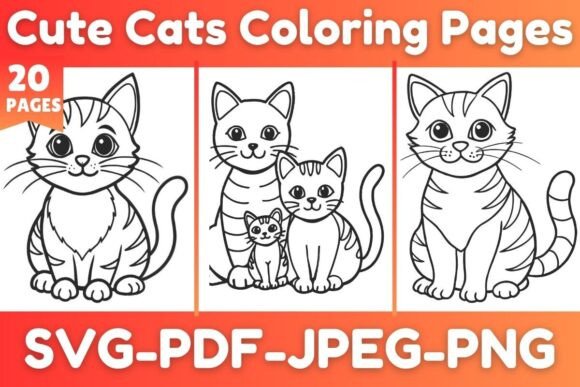
When I opened Cat Coloring Page and Coloring Book, my first thought wasn’t “cute”—it was “stitchable.” As someone who’s digitized hundreds of hand-drawn motifs for real embroidery projects, I looked past the coloring-book charm and straight at line weight, negative space, and contour clarity. This isn’t a dense, fussy illustration—it’s clean, confident, and built with breathing room. The cat’s outline is bold enough to hold up at 3–4 inches tall on a tote bag, yet delicate enough to translate well into a satin-stitched patch or baby onesie appliqué. There’s no overcrowding, no tiny interior crosshatching that would vanish under thread—or worse, cause thread breaks during run-throughs. That alone makes it stand out in the Coloring Pages Amp category.
Real Project Test: From Screen to Stitched Tote Bag
Last week, I used Cat Coloring Page and Coloring Book as the centerpiece for a custom embroidered canvas tote—meant for a local pet boutique’s holiday launch. I resized it to 3.75″ wide, added subtle paws and a single whisker detail in running stitch (keeping it light), and stitched it onto medium-weight natural canvas with tear-away stabilizer. The result? Crisp edges, zero skipped stitches, and a handmade look customers immediately paused to admire. It didn’t scream “digital download”—it looked intentional, warm, and quietly professional. That’s the quiet power of this design: it bridges coloring-book friendliness with embroidery-grade structure.
Where It Shines—and Where to Pause
Cat Coloring Page and Coloring Book excels on stable, medium-to-heavy fabrics: tea towels, denim aprons, cotton pillow covers, and unstructured sweatshirts. Its open shapes translate beautifully into fill-stitch backgrounds or soft satin-stitched outlines. I’ve also used it successfully as a base for simple appliqué—cutting the cat shape from contrasting fabric and finishing the edge with a tight satin stitch.
That said, proceed thoughtfully with:
- Small hoop sizes (<4″): The design’s proportions work best when given at least 3.5″ of width—tight cropping risks losing expressive curve in the tail or ear.
- Stretchy or thin fabrics (like jersey or voile): Without proper cut-away stabilizer and careful hooping, those smooth outer lines can distort. Always test first.
- Dark or textured fabrics: Because the original is line-art based—not pre-digitized—the contrast relies on your thread choice. A light gray or cream thread on navy denim reads beautifully; neon pink on black felt? Less so. Mock it up in grayscale before stitching.
- Curved surfaces (caps, curved pillow corners): The cat’s balanced silhouette holds up better than most, but avoid placing the face directly over a seam or extreme curve without repositioning.
What It Adds to Your Finished Product—Beyond the Thread
This isn’t just about whether the stitches land cleanly. It’s about how the design affects perception. Customers don’t see “coloring page”—they see personality. On a nursery pillow cover, Cat Coloring Page and Coloring Book feels gentle and timeless, not trendy or dated. On an Etsy listing for personalized baby gifts, it signals care and craft—not clipart. For small shop owners building brand consistency, its clean, friendly tone pairs naturally with neutral palettes, kraft packaging, and handwritten tags. It supports your story instead of competing with it.
I’ve watched buyers linger longer on product photos featuring this design—especially when styled simply: a single cat on an off-white linen tea towel, or outlined in matte black thread on oatmeal canvas. That pause? That’s trust building. It says “handmade with intention,” even when the file started as a digital download.
Practical Notes Every Embroidery Designer Should Check
Before committing to a full production run—or listing a finished item on Etsy—here’s what I do every time with Cat Coloring Page and Coloring Book:
- Test on scrap fabric *exactly* like my final product—same weight, same stretch, same dye lot if possible.
- Check thread color contrast using both light and dark mockups—not just on screen, but printed B&W.
- Review stitch density: If converting to machine embroidery, avoid overfilling the interior unless you want stiffness. A light fill or open-outline version often reads cleaner.
- Confirm hoop size compatibility early—especially if layering with text or other motifs.
- Zoom in on corners and curves: Are there any unintended overlaps or micro-gaps that could fray or snag?
- Use proper stabilizer—medium tear-away for cotton, cut-away for knits, and always baste for layered garments like hoodies.
- Verify licensing terms: Since this is listed as a Graphics product, confirm whether commercial use of finished embroidered items is permitted—and whether resale of the digital file itself is allowed.
Final Thought: A Quietly Versatile Asset
Cat Coloring Page and Coloring Book won’t dominate a trade show booth—but it will sell steadily at craft fairs, convert browsers on Etsy, and earn repeat orders from boutique clients who value subtlety over saturation. It’s the kind of design that works harder behind the scenes: supporting your brand voice, holding up across seasons, and translating reliably from screen to stitch. For embroidery designers and creative entrepreneurs who prioritize wearability, clarity, and quiet charm over flash—it’s not just usable. It’s trustworthy.